
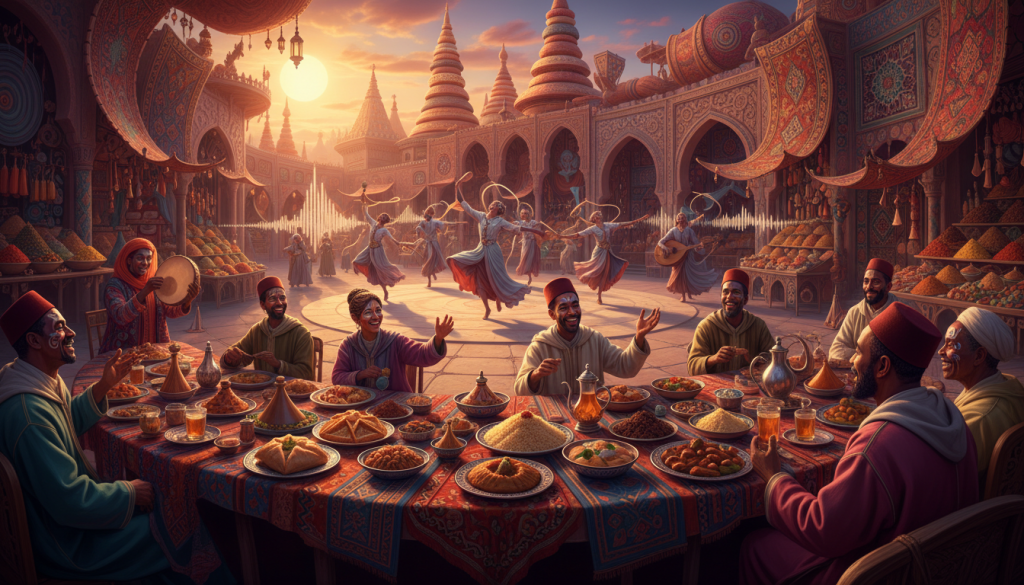
Imagine the scent of fresh mint tea and the rhythm of drums echoing through ancient streets. You are standing where the golden desert meets vibrant cities, feeling a deep connection to a world that values community and spirit. This Moroccan journey represents more than just simple travel; it is a way to touch the deep essence of a nation.
The people of this land blend Berber heritage with modern flair seamlessly. In the Atlas Mountains, music and dance celebrate a vibrant ancestry. Meanwhile, busy cities host film festivals that show how la culture marocaine evolves with every passing year.
You might find yourself lost in the beauty of the Atlas Mountains. There, the Berber spirit thrives in every handcrafted rug and intricate piece of jewelry. This mix of ancient life and contemporary art makes the region truly extraordinary for every visitor.
You will see that traditions marocaines are not just memories; they are part of a living pulse. From local crafts to big screens, Moroccan culture remains a beautiful tapestry of traditional and contemporary elements. These experiences help you understand the world through a much brighter lens.
Key Takeaways
- Discover the seamless blend of ancient Berber roots and modern urban life.
- Explore how music and dance preserve history in the Atlas Mountains.
- Learn about the evolving identity shown in modern film and art festivals.
- Understand the importance of local craftsmanship in daily life and rituals.
- Experience the warm hospitality that defines the spirit of the nation.
1. How to Understand the Foundations of Moroccan Culture
Moroccan culture is a mix of Arab, Berber, and Moorish traditions. This rich heritage shows in the country’s buildings, food, and social ways.
The Blend of Arab, Berber, and Moorish Heritage
Moroccan culture is a special mix of Arab, Berber, and Moorish traditions. The Arab influence is seen in the language and Islamic practices. The Berber culture adds to the country’s folklore and customs. The Moorish legacy is seen in the architecture and art.
You can see this mix in the lively souks. Here, traditional crafts and local goods are sold. You’ll find intricate textiles and ornate tiles too.
How Islamic Traditions Shape Daily Life
Islam is very important in Morocco. The call to prayer from mosques marks the day. Many businesses close for prayer times. Islamic values like hospitality and respect for elders are big in Moroccan society.
The Role of Family Structure in Preserving Traditions
Family is key in Moroccan culture. The extended family helps keep traditions alive. Family gatherings and celebrations are big in Morocco. Here, stories and customs are shared across generations.
Understanding Regional Cultural Diversity
Morocco has many different cultures. From the Berber communities in the Atlas Mountains to the coastal cities. A table showing some regional differences can help you understand better:
| Region | Cultural Characteristics | Notable Traditions |
|---|---|---|
| Atlas Mountains | Predominantly Berber communities | Traditional Berber festivals and crafts |
| Coastal Cities | Blend of Arab, European, and local influences | Unique culinary traditions and cultural festivals |
| Desert Regions | Strong Arabic and Islamic heritage | Horse riding ceremonies and traditional clothing |
Knowing these regional differences will make your experience of Moroccan culture richer. It will help you appreciate the country’s diverse heritage.
2. Experiencing Morocco’s Major Religious Celebrations
Exploring Moroccan culture, you’ll see how religious events shape its traditions marocaines and customs. Faith is a big part of life in Morocco. Its major religious celebrations give a glimpse into its spiritual heart.
How to Respectfully Observe Ramadan Customs
Ramadan, a holy month of fasting, is deeply respected in Morocco. Muslims fast from dawn to sunset, not eating or drinking.
Understanding Daily Fasting Rituals
The fast ends with iftar, a meal that brings people together. You can feel Moroccan hospitality by joining iftar, where traditional foods like cuisine marocaine are shared.
Participating in Iftar Gatherings
Attending iftar with locals is enriching. Restaurants and mosques offer iftar meals, showing Ramadan’s spirit of generosity and unity in Morocco.
Witnessing Eid al-Fitr and Eid al-Adha Traditions
Eid al-Fitr ends Ramadan, and Eid al-Adha honors Abraham’s sacrifice. These celebrations feature communal prayers, feasting, and charity.
“The Eids are times of great joy and festivity in Morocco, reflecting the country’s strong Islamic heritage and its values of community and compassion.”
Attending Mawlid Celebrations and Processions
Mawlid celebrates the Prophet Muhammad’s birthday. It includes processions, hymns, and gatherings that showcase Morocco’s coutumes nord-africaines.
What You’ll Experience During Friday Prayer Customs
Friday prayers are key in Morocco. Visiting a mosque or watching prayers at Jemaa el-Fnaa in Marrakech offers a deep look into its spiritual practices.
3. Navigating Traditional Life Milestone Celebrations
Morocco’s traditional celebrations, like weddings and coming-of-age ceremonies, show its rich culture. These events are big life moments. They bring families and communities together to celebrate with joy.
How Moroccan Weddings Unfold Over Multiple Days
Moroccan weddings are known for their lively celebrations that last for days. They include many traditional rituals, each with its own meaning.
The Henna Night Ceremony Step-by-Step
The Henna Night is a special tradition. The bride’s hands and feet are decorated with henna designs. It’s believed to bring luck and happiness to the couple.
Understanding the Amariya Bridal Procession
The Amariya Bridal Procession is a grand event. The bride is escorted to her new home with music, dancing, and celebration. It’s a time of great joy.
Traditional Berber Wedding Customs
Berber wedding customs are full of tradition and cultural heritage. They have unique rituals and ceremonies that show the community’s history and values.
| Custom | Description | Significance |
|---|---|---|
| Henna Night | Bride’s hands and feet are decorated with henna | Bring good luck and happiness |
| Amariya Procession | Bride is escorted to her new home | Celebration of union |
| Berber Wedding Rituals | Unique customs reflecting Berber heritage | Preserve cultural traditions |
Birth Celebrations and the Sebou Ceremony
The Sebou Ceremony happens seven days after a child’s birth. It welcomes the newborn into the family and community with rituals.
Coming-of-Age Rituals You Should Know About
Coming-of-age rituals in Morocco mark a person’s transition to adulthood. These ceremonies are big milestones in life. They are celebrated with traditional rituals and festivities.
Learning about these traditional celebrations gives us a deeper look into Morocco’s rich culture. It shows the importance of these events in the lives of its people.
4. Mastering Daily Moroccan Culture Customs and Social Etiquette
To truly experience Moroccan hospitality, you need to understand daily customs and etiquette. Morocco’s culture is a mix of Arab, Berber, and Moorish traditions. These traditions are seen in everyday life.
How to Properly Greet People in Different Settings
Greeting people right is key in Moroccan culture. When you meet someone, say “As-salamu alaykum” (peace be upon you). The answer is “Wa alaykum as-salam” (and upon you be peace).
In formal places, a handshake is common. But in more conservative or rural areas, a nod or a greeting is better.
Understanding the Moroccan Tea Ceremony Protocol
The Moroccan tea ceremony is a big part of daily life and social events. It’s a sign of hospitality and friendship.
The Art of Pouring Mint Tea
Pouring tea from high into small glasses is more than serving a drink. It shows skill and generosity. Mint tea is often used, making the host’s welcome clear.
When and How Tea is Served
Tea is served many times a day and is key in social gatherings. It’s polite to accept tea when offered. Refusing can be seen as rude.
| Occasion | Tea Serving Custom |
|---|---|
| Social Gatherings | Tea is served as a sign of hospitality and respect. |
| Business Meetings | Tea is often served to facilitate a friendly atmosphere. |
| Family Visits | Tea is a staple, served with traditional sweets. |
Navigating Hammam Culture and Bathing Rituals
Hammams, or public baths, are big in Moroccan culture. They’re places for socializing and relaxation. Knowing the etiquette of hammam visits can make your experience better.
Respecting Dress Codes and Modesty Customs
Morocco is a conservative country. Dressing modestly is wise, especially in rural areas or religious sites. Women should cover their shoulders and knees as a sign of respect.
By understanding and respecting these customs and etiquette, you can have a more authentic and enjoyable time in Morocco.
5. Discovering Berber Cultural Heritage and Ancient Traditions
Exploring Morocco lets you dive into the rich Berber culture. Known as “culture berbère” in French, it’s a vibrant heritage across the country. It offers a unique look into Morocco’s ancient traditions.
How to Experience Amazigh Festivals Throughout the Year
Attending Amazigh festivals is a great way to dive into Berber culture. These festivals feature traditional music, dance, and art. They give a lively and colorful view into the community’s heritage.
Understanding Traditional Berber Tattoo Symbolism
Berber tattoos hold deep symbolism. Traditionally, they showed status, spirituality, and identity. Understanding these tattoos can deepen your appreciation of Berber art and tradition.
Learning About Carpet Weaving Rituals and Meanings
Carpet weaving is a key tradition in Berber culture. Each carpet tells a story through its patterns and colors. Learning about these carpets is rewarding, showing the skill and craftsmanship of Berber women.
Exploring Mountain Village Customs and Hospitality
Visiting Berber mountain villages lets you experience their warm hospitality. You’ll be welcomed with traditional tea ceremonies. You’ll also learn about their daily life and traditions.
Experiencing Berber Music and Dance Traditions
Berber music and dance are vital parts of their culture. Their lively performances reflect the community’s history and traditions. Experiencing these performances is a memorable part of your Moroccan journey.
| Tradition | Description | Significance |
|---|---|---|
| Amazigh Festivals | Colorful events showcasing Berber music, dance, and art | Celebration of Berber heritage and identity |
| Berber Tattoos | Symbolic tattoos signifying status, spirituality, and identity | Representation of Berber art and cultural symbolism |
| Carpet Weaving | Traditional craft where carpets are woven with symbolic patterns | Storytelling through art and preservation of cultural heritage |
6. Exploring Moroccan Cuisine Rituals and Dining Customs
Dining in Morocco is more than just eating. It’s a time to come together. Moroccan cuisine, or cuisine marocaine, is a mix of flavors and smells that show the country’s rich history.

How to Participate in a Traditional Moroccan Meal
Trying a traditional Moroccan meal is a feast for your senses. You use your right hand and bread to pick up food. Knowing the right way to eat is important to enjoy the meal.
The Proper Way to Eat with Your Hands
Eating with your hands is an art in Morocco. First, wash your hands. Then, use your right hand to tear bread and pick up food from shared dishes.
Understanding Bread’s Sacred Role in Meals
Bread is key in Moroccan meals. It’s not just a side dish; it’s a tool and a sign of welcome. It’s rude to refuse bread when offered.
Following the Order and Etiquette of Multi-Course Dining
Moroccan meals have many courses. You start with salads and appetizers, then the main course, like tagine or couscous. Knowing the order makes the meal better.
Seasonal Food Traditions and Harvest Celebrations
Morocco celebrates food all year. For example, the rose harvest in Kelaa M’Gouna is a big deal. It’s celebrated with festivals and special foods.
The Communal Aspect of Tagine and Couscous Meals
Tagine and couscous are big in Moroccan food. They’re eaten together. Mealtimes are for sharing food and stories with family and friends.
Exploring Moroccan cuisine shows the deep cultural heritage. Whether at a traditional meal or a harvest celebration, dining is always about coming together.
7. Immersing Yourself in Moroccan Music and Artistic Traditions
Exploring Morocco reveals a world of vibrant music and art. These traditions show the country’s rich history and cultural diversity. Moroccan art and music are more than just entertainment; they are a big part of its identity and past.
How to Experience Gnawa Music Healing Ceremonies
Gnawa music mixes African, Arab, and Berber styles. You can join Gnawa music healing ceremonies, or “derdeba.” These events feature rhythmic tunes and trance-like states. They offer a spiritual and entertaining experience.
Understanding Andalusian Classical Music Traditions
Andalusian classical music is a key part of Morocco’s musical heritage. It comes from the courts of Al-Andalus and is known for its poetic lyrics and complex tunes. You can enjoy concerts and festivals to experience this tradition.
Participating in Ahidous Folk Dance Celebrations
Ahidous is a traditional Berber folk dance. It’s performed at celebrations and special events. Joining Ahidous celebrations lets you experience Moroccan culture’s communal spirit through group dancing and singing.
Exploring Storytelling and Halqa Performance Rituals
Storytelling is vital in Moroccan culture. Halqa performances are a favorite form of entertainment. Halqa is when people gather around a storyteller or performer. You can see Halqa in public squares and festivals.
Witnessing Traditional Moorish Architecture and Its Cultural Significance
Moroccan architecture combines Islamic, Arab, and Berber styles. Visit historic cities like Fez and Marrakech to see traditional Moorish architecture. The intricate designs, arches, and tile work show Morocco’s cultural wealth.
Exploring these artistic traditions helps you understand Moroccan culture and history. Morocco’s music, dance, and architecture will surely make a lasting impression.
8. Experiencing Regional Festivals and Local Customs Across Morocco
Traveling through Morocco, you’ll find many regional festivals and local customs. These show the country’s rich cultural identity. For example, the Rose Festival in Kelaa M’Gouna and the Tan-Tan Moussem highlight Morocco’s cultural diversity.
How to Attend the Rose Festival in Kelaa M’Gouna
The Rose Festival in Kelaa M’Gouna is a lively event. It takes place in the Valley of Roses. You can see flower crowning, watch traditional dances, and try local food.
Understanding the Date Harvest Festival in Erfoud
Erfoud’s Date Harvest Festival is a big deal. It celebrates the region’s famous dates. You can taste different dates, watch music and dance, and learn about harvesting traditions.
Experiencing the Tan-Tan Moussem Cultural Gathering
The Tan-Tan Moussem is a special cultural event. It brings together tribes from all over. You can enjoy music and dance, watch camel racing, and see local crafts.
Navigating Cultural Differences Between Morocco’s Cities
Morocco’s cities have their own unique cultures. This is due to their history, geography, and cultural influences. Here’s a look at some cultural differences between major cities:
| City | Cultural Characteristics | Traditional Practices |
|---|---|---|
| Fez | Rich spiritual heritage, traditional crafts | Spiritual customs, traditional crafts like woodworking and pottery |
| Marrakech | Vibrant marketplace culture, entertainment | Marketplace rituals, traditional music and dance performances |
| Essaouira | Coastal and Gnawa traditions | Gnawa music and cultural influences, traditional fishing practices |
| Chefchaouen | Mountain town customs, relaxed atmosphere | Traditional mountain customs, hiking and trekking activities |
Fez: Traditional Crafts and Spiritual Customs
Fez is known for its spiritual heritage and crafts. You can see the city’s culture by visiting the ancient medina. Also, explore traditional crafts and attend spiritual ceremonies.
Marrakech: Marketplace Rituals and Entertainment
Marrakech is known for its lively market culture and entertainment. You can dive into the city’s vibe by exploring souks. Also, watch traditional performances and try local food.
Essaouira: Coastal and Gnawa Traditions
Essaouira is a coastal town with a unique Gnawa heritage. You can enjoy Gnawa music, local crafts, and beautiful beaches.
Chefchaouen: Mountain Town Customs
Chefchaouen is a charming mountain town. It has a relaxed atmosphere and traditional customs. You can hike, explore markets, and try traditional food.

Embracing la Culture Marocaine
Exploring Morocco is more than seeing famous sites. It’s about connecting with its people and traditions. La culture marocaine is a mix of Arab, Berber, and Moorish influences. Every celebration and daily custom shows the importance of community and tradition.
When you dive into l’héritage marocain, you’ll see how food brings people together. Whether it’s a big meal or a festive event, food is key. By joining in these traditions, you’ll learn more about Morocco’s values and customs.
Morocco’s culture offers many chances for meaningful experiences. Walking through souks, attending festivals, or having tea with friends shows Morocco’s warmth. So, take your time to enjoy the vibe, talk to locals, and let Morocco’s culture touch your heart.