
The best Moroccan foods that tourists love.
Food cuisine de rue marocaine, cuisine marocaine, desserts marocains populaires, épices du maroc, plats à base de couscous, plats traditionnels marocains, recettes de tajineImagine the sun setting over the Atlas Mountains as you share a warm meal with a local family. The air is filled with the scent of warm spices. This creates a memory that lasts forever. Moroccan culture comes alive through its unique food traditions.
The cuisine marocaine mixes Berber, Arabic, Andalusian, and Mediterranean flavors in every dish. Each bite tells a story of ancient trade routes and diverse heritage. The flavors are as bold and colorful as Chefchaouen’s blue streets.
Exploring plats marocains traditionnels is a unique sensory journey. Whether it’s a slow-cooked stew or a fragrant grain dish, the seasoning is incredible. This guide invites you to taste North Africa’s heart and see why travelers love Moroccan food.
The local people’s hospitality makes every meal feel special. You’re not just a guest; you’re part of a long history of sharing. Let the magic of these authentic and savory tastes take you away.
Key Takeaways
- Diverse cultural roots including Berber, Arab, and Mediterranean influences.
- Deep emphasis on communal dining and legendary local hospitality.
- Bold and complex use of aromatic spices in every recipe.
- Unique cooking methods such as slow-stewing in clay vessels.
- A sophisticated balance of savory and sweet flavor profiles.
- Reliance on fresh, locally sourced ingredients from vibrant markets.
Exploring the vibrant world of Moroccan food
Moroccan cuisine is known for its bold flavors and aromas. It shows the country’s rich cultural heritage. Traditional recipes mix with spices and herbs, making it unique.
Spices and communal dining are key to Moroccan food. As you explore, you’ll see how spices bring out the flavors. And how meals bring people together.
The role of spices in local cuisine
Moroccan food is famous for its bold flavors, thanks to spices. Cumin, coriander, ginger, and cinnamon are common. They add depth and warmth to dishes.
“Ras el hanout” is a special spice mix. It changes by region and chef. It shows the diversity and richness of Moroccan cooking.
Some of the most popular Moroccan spices include:
- Cumin
- Coriander
- Ginger
- Cinnamon
- Turmeric
Dining etiquette and the communal experience
Dining in Morocco is more than just eating. It’s about sharing and coming together. Meals are served on large plates, and everyone gathers around.
This style of eating promotes socializing. It’s a big part of Moroccan hospitality.
- Use your right hand when eating, as the left is considered unclean.
- Wait for the host to invite you to start eating.
- Show gratitude for the food and company.
Iconic main courses you must try
Exploring Morocco’s rich food scene, you’ll find many iconic dishes. Moroccan food is a mix of flavors and smells, each dish sharing a story of tradition and culture.
Main courses in Morocco reflect the country’s history and culture. They use fresh ingredients, spices, and cooking methods passed down through generations.

The classic lamb or chicken tagine
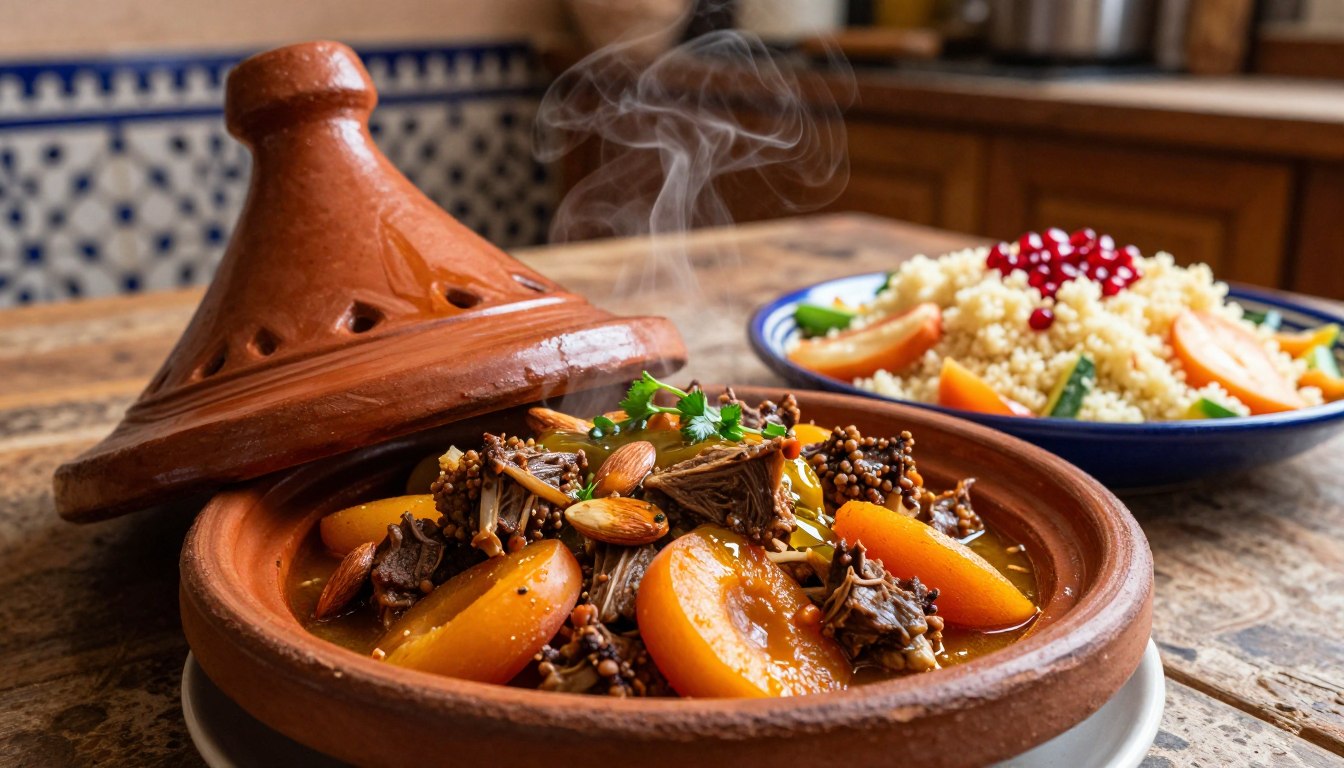
The tagine is a famous Moroccan dish. It’s a slow-cooked stew with meat, veggies, and dried fruits, flavored with spices. The dish is cooked in a clay pot with a conical lid, trapping steam to enhance flavors.
In many meilleurs restaurants marocains, you can enjoy tajines savoureux. Whether you like lamb or chicken, trying the tagine is a must when exploring plats marocains traditionnels.
Couscous: The Friday tradition
Couscous is a key part of Moroccan cuisine, often eaten on Fridays. It’s made from semolina flour and served with veggies and meats.
Making couscous is an art, involving steaming semolina to perfection. It’s a dish that brings people together, symbolizing unity and community.
Pastilla: A unique blend of sweet and savory
Pastilla is a savory pie with layers of pastry, meat, onions, and spices. It’s a dish that balances sweet and savory, offering a unique taste experience.
This traditional Moroccan dish is served at special events. Trying pastilla, you’ll see why it’s a must-try among plats marocains traditionnels.
Street food and savory snacks for your journey
As you explore Morocco’s busy streets, you’ll find a world of tastes in its street food and snacks. The markets and souks are alive with smells of local food, inviting you to try different dishes.
Moroccan street food shows off the country’s rich food history. You’ll find everything from hearty soups to crispy pastries. Each area has its own special dishes.

Harira soup: The heart of Moroccan comfort
Harira soup is a key part of Moroccan food, often eaten as a starter or light meal. It’s made with tomatoes, lentils, chickpeas, and spices. This soup is especially loved during Ramadan, when it’s eaten to end the fast.
Harira soup is loved for its simple yet rich flavor. Enjoying this warm soup, you’ll see why it’s at the heart of Moroccan comfort food.
Msemen: The versatile Moroccan pancake
Msemen is a Moroccan pancake that’s both flaky and buttery. It’s filled with cheese, herbs, or honey. This dish is great as a snack or light meal, loved by both locals and tourists.
Whether you like it savory or sweet, there’s a msemen for everyone. Make sure to try this tasty pancake while exploring Morocco’s street food.
Briouats: Crispy pockets of flavor
Briouats are crispy pastry pockets filled with meat, onions, cheese, and herbs. These snacks are perfect for eating on the move. Their crunchy outside and flavorful inside are sure to please.
Trying briouats is a must when you’re sampling street foods in Morocco. They show the creativity and skill of Moroccan cuisine, and you’ll want more.
Sweet treats and traditional beverages
Moroccan sweets and drinks are fascinating, showing the country’s warm hospitality. You’ll find rich flavors and aromas in Moroccan desserts and drinks. They are loved by many.

Chebakia: The honey-coated delight
Chebakia is a traditional Moroccan cookie you must try. These rose-shaped cookies are dipped in syrup and topped with sesame seeds. They offer a mix of textures and flavors. Chebakia is enjoyed during special times, showing Morocco’s rich culinary history.
Moroccan mint tea: The symbol of hospitality
Moroccan mint tea is more than a drink; it’s a sign of hospitality. It’s made with green tea and fresh spearmint leaves. This refreshing drink is key in social gatherings.
The way mint tea is prepared and served is an art. It shows the host’s generosity and respect for guests.
Freshly squeezed orange juice from the souks
Freshly squeezed orange juice is a favorite in Morocco, especially in souks. It’s made from fresh oranges, offering a tangy and refreshing drink. Enjoying this juice in a Moroccan souk is unforgettable.
Conclusion
Moroccan cuisine shows the country’s rich culture, with a wide range of flavors. You’ll find everything from the aromatic spices in tagine and couscous to the tasty street food and desserts. There’s something for everyone to love.
Exploring Moroccan food, you’ll find a cuisine that’s both lively and welcoming. Make sure to check out the top Moroccan restaurants. They offer authentic tastes and warm hospitality.
Trying Moroccan dishes or street food, you’ll be amazed by the flavors. Moroccan cuisine is unforgettable. So, come and see the magic of Moroccan food for yourself.